SSL Checker: Inspect a TLS Certificate
Inspect TLS information returned by an HTTPS request from a remote probe, including the certificate subject, issuer, validity dates and probe trust result when available. This SSL checker checks the public domain’s root endpoint. It is not an exhaustive certificate-chain, cipher-suite or browser-compatibility audit.
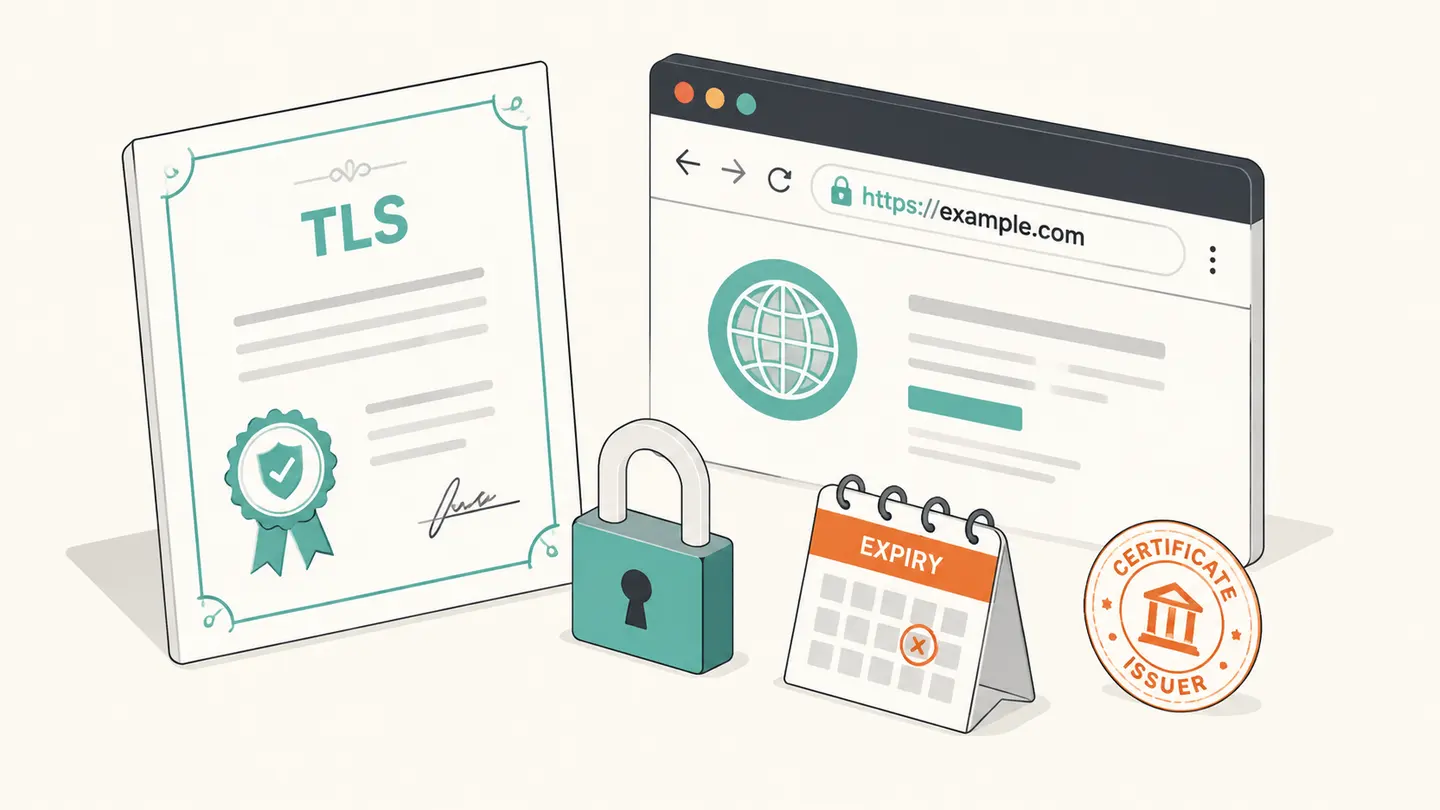
Inspect TLS information returned by an HTTPS request from a remote probe, including the certificate subject, issuer, validity dates and probe trust result when available. This SSL checker checks the public domain’s root endpoint. It is not an exhaustive certificate-chain, cipher-suite or browser-compatibility audit.
Real certificate dates and trust result from Globalping’s HTTPS measurement. Unreturned fields stay unavailable.
Best solution
Inspect TLS information returned by an HTTPS request from a remote probe, including the certificate subject, issuer, validity dates and probe trust result when available.
Real certificate dates and trust result from Globalping’s HTTPS measurement. Unreturned fields stay unavailable.
No measurement yet. This checks from Globalping probes, not from your computer. No continuous monitoring.

Opens the Kepo download page; this calculation or file is not transferred.
Key solutions at a glance The main decisions from this guide, condensed into one table.
How to Use This Check
Enter the exact public hostname used by visitors. A parent domain and a subdomain can present different certificates, even when they lead to related services. Use the hostname rather than replacing it with an IP, because name-based TLS configuration can affect which certificate the server presents.
Choose a remote region, consent to the public measurement and run the SSL checker. The request uses HTTPS on the root path. The result identifies the actual probe and time, which matters when a content-delivery service or load balancer is distributing traffic across several endpoints.
Read validity dates and the trust result separately. A certificate can be within its date range but fail another trust condition. Conversely, a missing certificate object means this measurement did not provide the details; it should not be displayed as a valid certificate with a made-up expiry date.
Compare the subject and issuer with your deployment records, then inspect the raw result when the observation differs from expectations. If you recently renewed a certificate, check the actual endpoint serving users rather than assuming that a successful issuance automatically updated every edge or origin.
What the Result Actually Means
SSL checker remains a common search phrase, although modern HTTPS connections use TLS. The certificate identifies a subject and is evaluated under the trust rules of the client making the request. Here that client is the remote probe, not every visitor’s browser. The tool displays the provider’s authorized flag and certificate dates without claiming to enumerate all alternative chains or supported algorithms. It can reveal an unexpected certificate or approaching expiry at the observed endpoint, but a full security assessment needs additional tests and a clear definition of the client population being supported.
| Field or observation | Meaning |
|---|---|
| Subject | Identity in the returned certificate |
| Issuer | Certificate issuing entity |
| Validity dates | Start and expiration timestamps |
| Probe trust | Accepted or rejected by that probe |
Limits and Common Misreadings
A certificate that one probe accepts is not a guarantee that all older devices, enterprise trust stores or application clients will accept it. Their trust configuration and supported protocols may differ.
This SSL checker does not promise a complete chain inventory, revocation audit, cipher enumeration or security grade. Do not replace those missing capabilities with a green “secure” badge based only on a successful HTTP response.
Certificate renewal and deployment are separate events. Keep the returned certificate details and observation time when checking a rollout. A scheduled reminder can help you revisit the endpoint, but this page does not create one automatically.
An Example of Careful Interpretation: Separate the Observation from Its Cause
Imagine a renewed certificate has been issued, but a remote observation still shows the previous expiration date. One possible reason is that the checked endpoint has not received the new deployment; another is that a different edge or hostname is being inspected. The observation alone does not decide between those explanations. Compare the hostname, returned subject, issuer and time with your deployment record. A successful issuance message is not evidence that every endpoint is serving the new certificate, so check the actual public route visitors use.
Keep a Useful Troubleshooting Record
Keep the question, input, observation time and source together. A bare address, percentage or status code is difficult to interpret later because it omits the connection and measurement context. When comparing two observations, note what changed between them: the target, network, VPN state, selected adapter, record type or remote origin. Change one relevant condition at a time when possible. That makes the comparison easier to explain without inventing a cause from one number.
Save only information you actually need. Network records can reveal infrastructure names and connection details, even when they do not contain a password. Remove unrelated identifiers before sharing a screenshot with another person. Never put private credentials in a domain field or publish an internal hostname as part of a public test. A copied result is a snapshot, not a promise that the same conditions still apply when someone reads it later.
Kepo is a Mac desktop-widget product for repeated checks and small workflows. A labeled troubleshooting note or a supported monitoring widget can keep the relevant context accessible while you work. The download link opens the product workflow; this article does not automatically install a configured diagnostic widget, transfer your network inputs or start a scheduled check. Confirm the actual widget’s capabilities before relying on it for ongoing observations.
Choose the next task by the question you need answered.
Frequently Asked Questions
Does ssl checker: inspect a tls certificate describe my entire network?
No. The steps and component above define the scope of this observation. A local adapter value, an external address and a remote probe result describe different viewpoints. Preserve that context and do not generalize a single observation to every application or connection.
What should I do when a result is unavailable?
Keep it marked unavailable. An unfinished or failed observation is not a successful zero result and does not establish the cause of a problem. Check the input and try again later only when another observation is useful. Respect provider limits rather than repeatedly retrying.
Does this page save a monitoring history or install a desktop widget?
No. The page provides the specific manual workflow described above. It does not schedule future tests or create a configured desktop widget. Save the relevant result yourself and use an explicitly supported monitoring feature if you need recurring checks.
Sources and Method
Primary references for the protocol, provider or operating-system steps.
A useful network answer states what was checked, where the observation came from and what remains unknown. Keep those distinctions when you save or share the result.
Stay informed with Kepo on your desktop
Embed interactive widgets, monitor dynamic sites, track APIs, and run ambient AI agents right on your macOS desktop.
Related Articles
View all posts →Ping Test from a Remote Probe
Run a small ICMP ping test from a Globalping probe to a public domain you have permission to test. The tool sends five packets and shows returned round-trip statistics and the actual probe location. It does not send ICMP packets from your browser or measure the first Wi-Fi hop from your computer.
Is It Down? Check a Website Response
Check whether a public domain returns an HTTPS response from a remote Globalping probe. This is a single root-path HEAD request with the actual response code and probe location. It helps answer “is it down from that location now?” but does not establish a worldwide outage or test every part of a website.
Packet Loss Test: A Remote ICMP Sample
Run a 16-packet ICMP sample from a named remote probe and inspect the sent, received and lost packet counts. This packet loss test describes the selected remote path during that short sample. It is not a browser-to-game-server test or a continuous measurement of your Wi-Fi connection.
TCP Port Checker
Check one TCP port on an authorized public domain from a remote Globalping probe. The port checker reports whether TCP responses were observed and retains packet statistics. A missing response is not proof that a port is closed, and this tool does not scan a range of ports or inspect your private local network.